


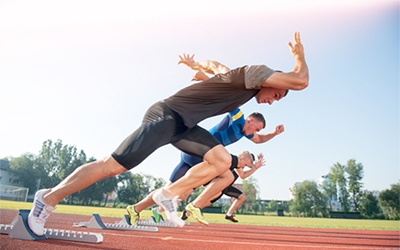
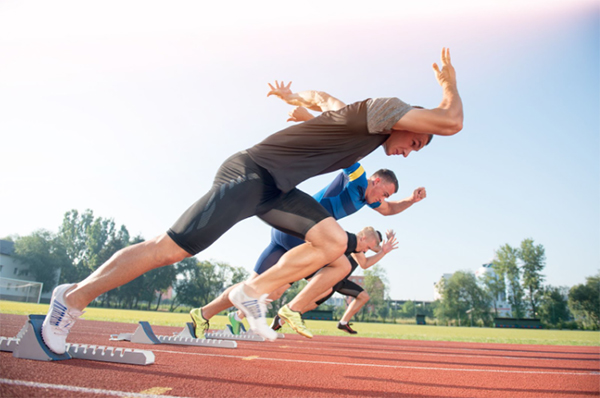
That sudden "pop" followed by sharp groin pain isn't always a simple muscle strain. For a sprinting teenager or a soccer-playing young adult, it could be something much more specific to their developing skeleton. Understanding these injuries is the key to a full recovery and a safe return to the field. Here is what you need to know about pelvic avulsion fractures.
Mechanism of Injury: Why Tendons Can Pull Bone in Teen Athletes
An avulsion injury occurs when a tendon or ligament pulls a small fragment of bone away from its attachment site. In adolescents, this typically happens at pelvic growth plates (apophyses) where major muscles anchor.
During explosive movements, such as sprinting, kicking, cutting, or jumping, the muscle contracts so forcefully that the relatively weaker growth plate fails before the tendon does.
Risk Factors for Pelvic Avulsion Injuries in Youth Sports
Teens and young adults, typically between 14 to 25 years, are uniquely susceptible because their skeletons haven't fully matured.
- Open Growth Plates: The pelvic apophyses are often the last parts of the skeleton to ossify (harden into solid bone). Until they do, they remain a "weak link" compared to the increasingly powerful muscles of a developing athlete.
- Rapid Growth Spurts: When bones grow faster than muscles can stretch, the resulting tension increases the mechanical load on these attachment points.
- High-Impact Sports: Activities involving sprinting, jumping, or sudden changes in direction, such as soccer, track and field, or football, provide the perfect storm for an avulsion event.
Key Growth Plate Injury Locations in the Adolescent Pelvis
The pelvis has several high-traffic areas where these injuries occur, each corresponding to a different muscle group:
- Anterior Superior Iliac Spine (ASIS): Involves the sartorius muscle; often felt at the front of the hip.
- Anterior Inferior Iliac Spine (AIIS): Involves the rectus femoris (quadriceps); common in kickers.
- Ischial Tuberosity: The "sit bone" at the base of the pelvis where the hamstrings attach; frequently injured during hurdles or sprinting.
How to Tell if Hip Pain Is a Growth Plate Fracture
Unlike a gradual overuse injury, an avulsion fracture is usually acute with immediate pain.. Athletes often report a snapping sensation, followed by localized swelling, bruising, and significant difficulty walking or moving the affected leg. Because these symptoms can mimic a severe muscle tear, a professional evaluation is vital to ensure the bone is properly aligned.
When Is Surgery Needed for a Displaced Pelvic Avulsion Injury?
The good news is that most pelvic avulsion injuries heal well with non-surgical management. This typically involves a period of protected weight-bearing (crutches), followed by a structured physical therapy program focused on hip and groin preservation. However, if the bone fragment is displaced by more than two centimeters, specialized surgical intervention may be required to restore pelvic symmetry and long-term joint function.
Frequently Asked Questions About Pelvic Avulsion Fractures
How is a pelvic avulsion fracture diagnosed?
Diagnosis begins with a detailed history of the injury and physical examination. Because symptoms can resemble a muscle strain, imaging is essential. Standard X-rays often confirm the diagnosis, while MRI may be used if the fracture is subtle or to evaluate surrounding soft tissues.
Can an athlete continue playing after the injury?
No. Continuing to play can worsen displacement of the bone fragment and delay healing. Immediate rest and proper evaluation are critical to prevent complications and support a safe recovery timeline.
How long does recovery usually take?
Most nondisplaced pelvic avulsion fractures heal within 12 to 16 weeks with initial protected weight-bearing and guided rehabilitation. Return to sport depends on pain resolution, restored strength, and full range of motion. High-demand athletes may require additional conditioning before returning to competition.
What does physical therapy involve?
Rehabilitation progresses in phases. Early treatment focuses on pain control and gentle mobility. As healing advances, therapy emphasizes strengthening the hip flexors, hamstrings, and core muscles, followed by sport-specific drills to restore speed, balance, and agility.
What are the risks of delayed or improper treatment?
Without appropriate management, athletes may develop chronic pain, muscle weakness, altered gait mechanics, or nonunion of the fracture fragment. Early diagnosis and structured follow-up significantly reduce these risks.
Will this injury affect long-term athletic performance?
With timely care and adherence to rehabilitation, most athletes return to their previous level of play without lasting limitations. Surgical cases may require a longer recovery period, but outcomes are generally favorable when alignment is restored.
How can pelvic avulsion fractures be prevented?
While not all injuries are preventable, proper warm-up routines, flexibility training, gradual progression of activity intensity, and strength conditioning during growth spurts can help reduce risk. Close attention to new hip or groin discomfort in adolescent athletes is also important.
When should a specialist be consulted?
Any athlete who experiences a sudden pop in the hip or groin followed by pain, swelling, or difficulty walking should be evaluated promptly. Early assessment ensures accurate diagnosis, appropriate imaging, and a recovery plan tailored to the athlete’s age, sport, and performance goals.
Hear From Our Patients
Choosing the right orthopedic specialist for hip and groin conditions is an important decision, particularly when long-term mobility and athletic performance are at stake. Hearing from patients who have experienced comprehensive hip and groin preservation care can offer valuable perspective. To learn more about our focused, patient-centered approach to restoring function and protecting joint health, explore our patient testimonials.
Reference Links:
AUTHOR: Srino Bharam, MD, MBA – Hip Preservation & Groin Orthopaedic Surgeon
Srino Bharam, MD, MBA, founder of the Hip Preservation & Groin Center in NYC, is a board-certified orthopaedic specialist with subspecialty certification in sports medicine, dedicated to hip and groin preservation and restoring active, healthy movement. Internationally recognized for master-level expertise in hip care, Dr. Bharam specializes in advanced treatment of hip and groin conditions, helping patients, from athletes to active individuals, return to peak function through comprehensive, patient-centered care.
Credentials & Recognition
Dr. Bharam trained under world-renowned hip surgeon Marc Philippon and completed additional training at Massachusetts General Hospital, where he received the Harvard Partners in Excellence Award for Orthopaedic Trauma Service. He is board certified by the American Board of Orthopaedic Surgery with subspecialty certification in sports medicine.
He serves as a physician consultant to the National Hockey League Players' Association and is a Full Professor of Orthopaedic Surgery. Dr. Bharam is an active fellow of the American Academy of Orthopaedic Surgeons and the American Orthopaedic Society for Sports Medicine, and has been recognized as a Master Instructor in Hip Arthroscopy by the Arthroscopy Association of North America for more than a decade. He is also a board member of the International Society of Hip Preservation
Dr. Bharam has been consistently recognized among the nation's leading orthopaedic surgeons, named a Castle Connolly Top Doctor multiple times, a New York Magazine Top Orthopaedic Surgeon, and one of America's Top Doctors — peer-nominated honors reflecting excellence among the top 7% of U.S. physicians.
Clinical Expertise & Academic Contributions
Dr. Bharam focuses on advanced hip preservation, groin injury management, and sports-related orthopaedic care. He performs surgery at leading institutions including Northwell Health, NewYork-Presbyterian Hospital, Hackensack Meridian Health, and Mount Sinai.
A prolific author and investigator, Dr. Bharam has published extensively in peer-reviewed orthopaedic literature and has served as guest editor for Orthopaedic Clinics of North America and Clinics in Sports Medicine. His academic and clinical work centers on improving outcomes, advancing hip preservation techniques, and optimizing return to activity for patients at every performance level.
Medical Disclaimer: This information is provided for educational purposes only and does not constitute medical advice. For diagnosis and treatment recommendations, please consult with Dr. Bharam.
Content authored by Dr. Srino Bharam and verified against official sources.